
Item specifics
-
Condition
-
-
Release Year
-
2001
-
ISBN
-
9780801487255
-
Book Title
-
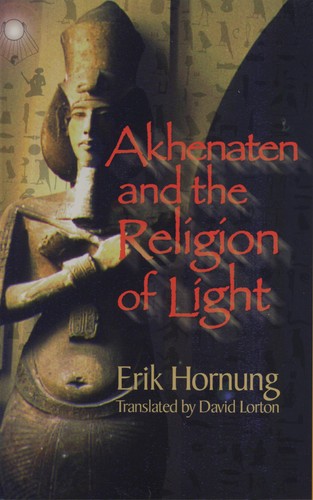
Akhenaten and the Religion of Light
-
Publisher
-
Cornell University Press
-
Item Length
-
8.4 in
-
Publication Year
-
2001
-
Format
-
Trade Paperback
-
Language
-
English
-
Illustrator
-
Yes
-
Item Height
-
0.4 in
-
Genre
-
Religion, Social Science, History
-
Topic
-
Archaeology, Theism, Ancient, Ancient / Egypt, Ethnic & Tribal
-
Item Weight
-
7.6 Oz
-
Item Width
-
6.5 in
-
Number of Pages
-
160 Pages
Akhenaten and the Religion of Light
About this product
Product Identifiers
Publisher
Cornell University Press
ISBN-10
0801487250
ISBN-13
9780801487255
eBay Product ID (ePID)
1831175
Product Key Features
Book Title
Akhenaten and the Religion of Light
Number of Pages
160 Pages
Language
English
Topic
Archaeology, Theism, Ancient, Ancient / Egypt, Ethnic & Tribal
Publication Year
2001
Illustrator
Yes
Genre
Religion, Social Science, History
Format
Trade Paperback
Dimensions
Item Height
0.4 in
Item Weight
7.6 Oz
Item Length
8.4 in
Item Width
6.5 in
Additional Product Features
Intended Audience
Trade
Dewey Edition
21
Reviews
“Eric Hornung. . . effectively and succinctly guides through the mess of interpretations to a sympathetic, yet historically critical understanding of the pharaoh’s theology and impact upon Egyptian history. . . Like any good historian he explains the social and historical context that gave rise to Akhenaten and his religion of light. The author has spent a life time trying to unravel for us the intricacies of Egyptian religion. His books are accessible, well written, and full of useful information.”–Tom Collins, Religious Studies in Secondary Schools, Spring 2000., “In this book, the author provides a concise, accurate, and very readable account of Akhenaten’s reign. . . It is one of the best books on the subject of this heretic pharaoh. Recommended reading for all.”-Frankie’s Bibliography of Ancient Egypt, “Eric Hornung. . . effectively and succinctly guides through the mess of interpretations to a sympathetic, yet historically critical understanding of the pharaoh’s theology and impact upon Egyptian history. . . Like any good historian he explains the social and historical context that gave rise to Akhenaten and his religion of light. The author has spent a life time trying to unravel for us the intricacies of Egyptian religion. His books are accessible, well written, and full of useful information.”-Tom Collins, Religious Studies in Secondary Schools, Spring 2000., “This short and eminently readable translation. . . focuses on the nature of Akhenaten’s religion, religious beliefs, and cultic practices, bringing together concepts and discussions from a wide range of scholarly writing.”-Susan Tower Hollis, SUNY Empire State College. Journal of the American Oriental Society, Vol. 121, No. 3 (2001), “A concise and thoughtful analysis of Akhenaten’s reign and religious innovations by a foremost expert on Egyptian religion. . . Throughout, Hornung’s knowledge of Egyptian religion and balanced coverage of the issues make this a publication of great value to anyone with an interest in Akhenaten or in Egyptian religion.”–Denise M. Doxey, Museum of Fine Arts, Boston. Religious Studies Review, Vol. 25, No. 4, October 2000, “The book is infused with critical inquiry; instead of merely repeating past theories, Hornung discusses and contextualizes the scholarship into the trends of the time it was written . . . Akhenaten and the Religion of Light is excellent.”–Choice, “A concise and thoughtful analysis of Akhenaten’s reign and religious innovations by a foremost expert on Egyptian religion. . . Throughout, Hornung’s knowledge of Egyptian religion and balanced coverage of the issues make this a publication of great value to anyone with an interest in Akhenaten or in Egyptian religion.”-Denise M. Doxey, Museum of Fine Arts, Boston. Religious Studies Review, Vol. 25, No. 4, October 2000, “This short and eminently readable translation. . . focuses on the nature of Akhenaten’s religion, religious beliefs, and cultic practices, bringing together concepts and discussions from a wide range of scholarly writing.”–Susan Tower Hollis, SUNY Empire State College. Journal of the American Oriental Society, Vol. 121, No. 3 (2001), “In Akhenaten and the Religion of Light, Erik Hornung, . . .explores the metaphysical and religious dimensions of Akhenaten’s ‘perestroika’ . . . shows how psychological and medical interpretations of Akhenaten’s portraits based on a literal reading of their anatomy-bending style have often fed dubious moral presumptions. . . .’Ugly’ and ‘sick’ Hornung tells us were the most common epithets applied to Amarna art by scholars at the turn of the century.”–Lawrence Osborne. Lingua Franca. April, 2000., “The book is infused with critical inquiry; instead of merely repeating past theories, Hornung discusses and contextualizes the scholarship into the trends of the time it was written … Akhenaten and the Religion of Light is excellent.”-Choice “In Akhenaten and the Religion of Light, Erik Hornung, …explores the metaphysical and religious dimensions of Akhenaten’s ‘perestroika’ … shows how psychological and medical interpretations of Akhenaten’s portraits based on a literal reading of their anatomy-bending style have often fed dubious moral presumptions…’Ugly’ and ‘sick’ Hornung tells us were the most common epithets applied to Amarna art by scholars at the turn of the century.”-Lawrence Osborne. Lingua Franca. April, 2000. “In this book, the author provides a concise, accurate, and very readable account of Akhenaten’s reign… It is one of the best books on the subject of this heretic pharaoh. Recommended reading for all.”-Frankie’s Bibliography of Ancient Egypt “Eric Hornung… effectively and succinctly guides through the mess of interpretations to a sympathetic, yet historically critical understanding of the pharaoh’s theology and impact upon Egyptian history… Like any good historian he explains the social and historical context that gave rise to Akhenaten and his religion of light. The author has spent a life time trying to unravel for us the intricacies of Egyptian religion. His books are accessible, well written, and full of useful information.”-Tom Collins, Religious Studies in Secondary Schools, Spring 2000. “A concise and thoughtful analysis of Akhenaten’s reign and religious innovations by a foremost expert on Egyptian religion… Throughout, Hornung’s knowledge of Egyptian religion and balanced coverage of the issues make this a publication of great value to anyone with an interest in Akhenaten or in Egyptian religion.”-Denise M. Doxey, Museum of Fine Arts, Boston. Religious Studies Review, Vol. 25, No. 4, October 2000 “This short and eminently readable translation… focuses on the nature of Akhenaten’s religion, religious beliefs, and cultic practices, bringing together concepts and discussions from a wide range of scholarly writing.”-Susan Tower Hollis, SUNY Empire State College. Journal of the American Oriental Society, Vol. 121, No. 3 (2001), In Akhenaten and the Religion of Light, Erik Hornung,…explores the metaphysical and religious dimensions of Akhenaten’s ‘perestroika’… shows how psychological and medical interpretations of Akhenaten’s portraits based on a literal reading of their anatomy-bending style have often fed dubious moral presumptions….’Ugly’ and ‘sick’ Hornung tells us were the most common epithets applied to Amarna art by scholars at the turn of the century., “In Akhenaten and the Religion of Light, Erik Hornung, . . .explores the metaphysical and religious dimensions of Akhenaten’s ‘perestroika’ . . . shows how psychological and medical interpretations of Akhenaten’s portraits based on a literal reading of their anatomy-bending style have often fed dubious moral presumptions. . . .’Ugly’ and ‘sick’ Hornung tells us were the most common epithets applied to Amarna art by scholars at the turn of the century.”-Lawrence Osborne. Lingua Franca. April, 2000., This short and eminently readable translation… focuses on the nature of Akhenaten’s religion, religious beliefs, and cultic practices, bringing together concepts and discussions from a wide range of scholarly writing., “In this book, the author provides a concise, accurate, and very readable account of Akhenaten’s reign. . . It is one of the best books on the subject of this heretic pharaoh. Recommended reading for all.”–Frankie’s Bibliography of Ancient Egypt, “The book is infused with critical inquiry; instead of merely repeating past theories, Hornung discusses and contextualizes the scholarship into the trends of the time it was written . . . Akhenaten and the Religion of Light is excellent.”-Choice
Grade From
College Graduate Student
Dewey Decimal
299/.31
Synopsis
Akhenaten, also known as Amenhotep IV, was king of Egypt during the Eighteenth Dynasty and reigned from 1375 to 1358 B.C. E. Called the “religious revolutionary,” he is the earliest known creator of a new religion. The cult he founded broke with Egypt’s traditional polytheism and focused its worship on a single deity, the sun god Aten. Erik Hornung, one of the world’s preeminent Egyptologists, here offers a concise and accessible account of Akhenaten and his religion of light. Hornung begins with a discussion of the nineteenth-century scholars who laid the foundation for our knowledge of Akhenaten’s period and extends to the most recent archaeological finds. He emphasizes that Akhenaten’s monotheistic theology represented the first attempt in history to explain the entire natural and human world on the basis of a single principle. “Akhenaten made light the absolute reference point,” Hornung writes, “and it is astonishing how clearly and consistently he pursued this concept.” Hornung also addresses such topics as the origins of the new religion; pro-found changes in beliefs regarding the afterlife; and the new Egyptian capital at Akhetaten which was devoted to the service of Aten, his prophet Akhenaten, and the latter’s family., Akhenaten, also known as Amenhotep IV, was king of Egypt during the Eighteenth Dynasty and reigned from 1375 to 1358 B.C. E. Called the “religious revolutionary,” he is the earliest known creator of a new religion. The cult he founded broke with Egypt’s traditional polytheism and focused its worship on a single deity, the sun god Aten. Erik Hornung, one of the world’s preeminent Egyptologists, here offers a concise and accessible account of Akhenaten and his religion of light.Hornung begins with a discussion of the nineteenth-century scholars who laid the foundation for our knowledge of Akhenaten’s period and extends to the most recent archaeological finds. He emphasizes that Akhenaten’s monotheistic theology represented the first attempt in history to explain the entire natural and human world on the basis of a single principle. “Akhenaten made light the absolute reference point,” Hornung writes, “and it is astonishing how clearly and consistently he pursued this concept.” Hornung also addresses such topics as the origins of the new religion; pro-found changes in beliefs regarding the afterlife; and the new Egyptian capital at Akhetaten which was devoted to the service of Aten, his prophet Akhenaten, and the latter’s family., Akhenaten, also known as Amenhotep IV, was king of Egypt during the Eighteenth Dynasty and reigned from 1375 to 1358 B.C. E. Called the “religious revolutionary,” he is the earliest known creator of a new religion. The cult he founded broke with…
LC Classification Number
BL2441.2
Price : 10.39
Ends on : N/A
View on eBay