Item specifics
- Condition
- Very GoodA book that does not look new and has been read but is in excellent condition. No obvious damage to the cover, with the dust jacket (if applicable) included for hard covers. No missing or damaged pages, no creases or tears, and no underlining/highlighting of text or writing in the margins. May be very minimal identifying marks on the inside cover. Very minimal wear and tear. See the seller’s listing for full details and description of any imperfections. See all condition definitionsopens in a new window or tab
- Seller Notes
- “Cover and edges may have some wear.”
- ISBN
- 9780195128369
- Book Title
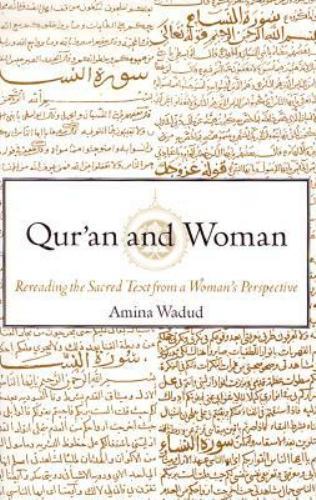
- Qur’an and Woman : Rereading the Sacred Text from a Woman’s Perspective
- Publisher
- Oxford University Press, Incorporated
- Item Length
- 8.2 in
- Edition
- 2
- Publication Year
- 1999
- Format
- Trade Paperback
- Language
- English
- Item Height
- 0.4 in
- Author
- Amina Wadud
- Features
- Revised
- Genre
- Religion, Social Science
- Topic
- Islam / Koran & Sacred Writings, Women’s Studies
- Item Weight
- 6.4 Oz
- Item Width
- 5.5 in
- Number of Pages
- 144 Pages
- Country of Origin
- United States
Qur’an and Woman: Rereading the Sacred Text from a Woman’s Perspective – Amina W
About this product
Product Identifiers
Publisher
Oxford University Press, Incorporated
ISBN-10
0195128362
ISBN-13
9780195128369
eBay Product ID (ePID)
341591
Product Key Features
Edition
2
Book Title
Qur’an and Woman : Rereading the Sacred Text from a Woman’s Perspective
Number of Pages
144 Pages
Language
English
Topic
Islam / Koran & Sacred Writings, Women’s Studies
Publication Year
1999
Features
Revised
Genre
Religion, Social Science
Format
Trade Paperback
Dimensions
Item Height
0.4 in
Item Weight
6.4 Oz
Item Length
8.2 in
Item Width
5.5 in
Additional Product Features
Intended Audience
Trade
LCCN
98-049460
Reviews
“Excellent study. Important for cross-cultural women’s studies.”–Sr.Martha Ann Kirk, University of the Incarnate Word
Edition Description
Revised edition
Synopsis
Fourteen centuries of Islamic thought have produced a legacy of interpretive readings of the Qu’ran written almost entirely by men. Now, with Qu’ran and Woman, Amina Wadud provides a first interpretive reading by a woman, a reading which validates the female voice in the Qu’ran and brings it out of the shadows. Muslim progressives have long argued that it is not the religion but patriarchal interpretation and implementation of the Qu’ran that have kept women oppressed. For many, the way to reform is the reexamination and reinterpretation of religious texts. Qu’ran and Woman contributes a gender inclusive reading to one of the most fundamental disciplines in Islamic thought, Qu’ranic exegesis. Wadud breaks down specific texts and key words which have been used to limit women’s public and private role, even to justify violence toward Muslim women, revealing that their original meaning and context defy such interpretations. What her analysis clarifies is the lack of gender bias, precedence, or prejudice in the essential language of the Qur’an. Despite much Qu’ranic evidence about the significance of women, gender reform in Muslim society has been stubbornly resisted. Wadud’s reading of the Qu’ran confirms women’s equality and constitutes legitimate grounds for contesting the unequal treatment that women have experienced historically and continue to experience legally in Muslim communities. The Qu’ran does not prescribe one timeless and unchanging social structure for men and women, Wadud argues lucidly, affirming that the Qu’ran holds greater possibilities for guiding human society to a more fulfilling and productive mutual collaboration between men and women than as yet attained by Muslims or non-Muslims., Fourteen centuries of Islamic thought have produced a legacy of interpretive readings of the Qu’ran written almost entirely by men. Now, with Qu’ran and Woman , Amina Wadud provides a first interpretive reading by a woman, a reading which validates the female voice in the Qu’ran and brings it out of the shadows. Muslim progressives have long argued that it is not the religion but patriarchal interpretation and implementation of the Qu’ran that have kept women oppressed. For many, the way to reform is the reexamination and reinterpretation of religious texts. Qu’ran and Woman contributes a gender inclusive reading to one of the most fundamental disciplines in Islamic thought, Qu’ranic exegesis. Wadud breaks down specific texts and key words which have been used to limit women’s public and private role, even to justify violence toward Muslim women, revealing that their original meaning and context defy such interpretations. What her analysis clarifies is the lack of gender bias, precedence, or prejudice in the essential language of the Qur’an. Despite much Qu’ranic evidence about the significance of women, gender reform in Muslim society has been stubbornly resisted. Wadud’s reading of the Qu’ran confirms women’s equality and constitutes legitimate grounds for contesting the unequal treatment that women have experienced historically and continue to experience legally in Muslim communities. The Qu’ran does not prescribe one timeless and unchanging social structure for men and women, Wadud argues lucidly, affirming that the Qu’ran holds greater possibilities for guiding human society to a more fulfilling and productive mutual collaboration between men and women than as yet attained by Muslims or non-Muslims., Fourteen centuries of Islamic thought have produced a legacy of interpretive readings of the Qu’ran written almost entirely by men. Now, with Qu’ran and Woman, Amina Wadud provides a first interpretive reading by a woman, a reading which validates the female voice in the Qu’ran and brings it out of the shadows. Muslim progressives have long argued that it is not the religion but patriarchal interpretation and implementation of the Qu’ran that have kept women oppressed. For many, the way to reform is the reexamination and reinterpretation of religious texts. Qu’ran and Woman contributes a gender inclusive reading to one of the most fundamental disciplines in Islamic thought, Qu’ranic exegesis. Wadud breaks down specific texts and key words which have been used to limit women’s public and private role, even to justify violence toward Muslim women, revealing that their original meaning and context defy such interpretations. What her analysis clarifies is the lack of gender bias, precedence, or prejudice in the essential language of the Qur’an. Despite much Qu’ranic evidence about the significance of women, gender reform in Muslim society has been stubbornly resisted. Wadud’s reading of the Qu’ran confirms womens equality and constitutes legitimate grounds for contesting the unequal treatment that women have experienced historically and continue to experience legally in Muslim communities. The Qu’ran does not prescribe one timeless and unchanging social structure for men and women, Wadud argues lucidly, affirming that the Qu’ran holds greater possibilities for guiding human society to a more fulfilling and productive mutual collaboration between men and women than as yet attained by Muslims or non-Muslims., This book contributes a gender-inclusive approach to one of the most fundamental disciplines in Islamic thought, Qu’ranic exegesis. Wadud breaks down specific texts and key words which have been used to limit women’s public and private role, even to justify violence toward Muslim women, revealing that their original meaning and context defy such interpretations. What her analysis clarifies is the lack of gender bias, precedence, or prejudice in the essential language of the Qur’an. Indeed, her understanding of the Qu’ran confirms women’s equality and constitutes legitimate grounds for contesting the unequal treatment women have experienced historically–and continue to experience legally–in Muslim communities.
LC Classification Number
BP134.W6W28 1999
Price : 9.99
Ends on : N/A
View on eBay