
Item specifics
- Condition
- Very GoodA book that does not look new and has been read but is in excellent condition. No obvious damage to the cover, with the dust jacket (if applicable) included for hard covers. No missing or damaged pages, no creases or tears, and no underlining/highlighting of text or writing in the margins. May be very minimal identifying marks on the inside cover. Very minimal wear and tear. See the seller’s listing for full details and description of any imperfections. See all condition definitionsopens in a new window or tab
- Seller Notes
- ISBN-10
- 1861892209
- Publication Name
- Reaktion Books
- Type
- Paperback
- ISBN
- 9781861892201
- Book Title
- Women, Islam and Cinema
- Book Series
- Locations Ser.
- Publisher
- Reaktion Books, The Limited
- Item Length
- 4.5 in
- Publication Year
- 2004
- Format
- Trade Paperback
- Language
- English
- Illustrator
- Yes
- Item Height
- 0.5 in
- Author
- Gönül Dönmez-Colin
- Genre
- Performing Arts
- Topic
- Film / General, Film / History & Criticism
- Item Weight
- 9 Oz
- Item Width
- 6.6 in
- Number of Pages
- 208 Pages
- Country of Origin
- United Kingdom
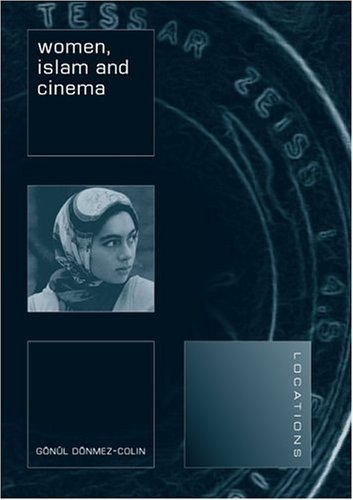
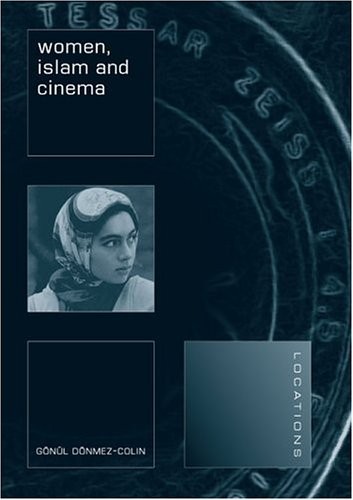
WOMEN, ISLAM AND CINEMA (LOCATIONS) By Gonul Donmez-colin *Excellent Condition*
About this product
Product Identifiers
Publisher
Reaktion Books, The Limited
ISBN-10
1861892209
ISBN-13
9781861892201
eBay Product ID (ePID)
30757308
Product Key Features
Book Title
Women, Islam and Cinema
Number of Pages
208 Pages
Language
English
Publication Year
2004
Topic
Film / General, Film / History & Criticism
Illustrator
Yes
Genre
Performing Arts
Book Series
Locations Ser.
Format
Trade Paperback
Dimensions
Item Height
0.5 in
Item Weight
9 Oz
Item Length
4.5 in
Item Width
6.6 in
Additional Product Features
Intended Audience
Trade
LCCN
2005-412515
Reviews
Presents a fascinating array of film narratives and characterizations. . . Rather than simplistically blaming men for women’s problems, the author seeks a deeper understanding of how repressive interpretations of Islam affect film and therefore culture, without losing sight of the fact that, in oppressed societies, men are losers too. . . Underscores the dynamic interplay between cinema and real life in countries where, literally in some cases, women were once dying to go to the movies., Informative and concise . . . Has moments of great insight into films, social context, and the interplay of modernity and tradition in Turkisth and Iranian cinema., This is one of the few film books I actually want to read. A very necessary examination of Islamic cinema which praises its bolder spirits and doesn’t hesitate to criticise those who censor and condemn them., presents a fascinating array of film narratives and characterizations. Her critical interpretations reveal how films can reflect socio-political transitions; the voices of filmmakers add authority to the text, as does her personal background in both Islamic and Western cultures. Dönmez-Colin shows how cinema may serve either to protect cultural values or to contest them, describing a complex scenario where women’s seemingly passive role in perpetuating traditions may be balanced by their courage in defying them . . . underscores the dynamic interplay between cinema and real life in countries where, literally in some cases, women were once dying to go to the movies, “Informative and concise . . . Has moments of great insight into films, social context, and the interplay of modernity and tradition in Turkisth and Iranian cinema.”- Cineaste, “Informative and concise . . . Has moments of great insight into films, social context, and the interplay of modernity and tradition in Turkisth and Iranian cinema.”–Cineaste , “Presents a fascinating array of film narratives and characterizations. . . Rather than simplistically blaming men for women’s problems, the author seeks a deeper understanding of how repressive interpretations of Islam affect film and therefore culture, without losing sight of the fact that, in oppressed societies, men are losers too. . . Underscores the dynamic interplay between cinema and real life in countries where, literally in some cases, women were once dying to go to the movies.”– Times Literary Supplement , “Presents a fascinating array of film narratives and characterizations. . . Rather than simplistically blaming men for women”s problems, the author seeks a deeper understanding of how repressive interpretations of Islam affect film and therefore culture, without losing sight of the fact that, in oppressed societies, men are losers too. . . Underscores the dynamic interplay between cinema and real life in countries where, literally in some cases, women were once dying to go to the movies.”-Maria Golia, Times Literary Supplement, Presents a fascinating array of film narratives and characterizations. . . Rather than simplistically blaming men for women’s problems, the author seeks a deeper understanding of how repressive interpretations of Islam affect film and therefore culture, without losing sight of the fact that, in oppressed societies, men are losers too. . . Underscores the dynamic interplay between cinema and real life in countries where, literally in some cases, women were once dying to go to the movies.
Dewey Edition
22
Dewey Decimal
791.43082/091767
Table Of Content
introduction 1. representations of women 2. violence against women and the politics of rape 3. islamist cinema as a genre 4. women’s films, films about women 5. women heroes of the new iranian cinema afterword references select bibliography films and addresses acknowledgements photo acknowledgements index
Synopsis
This is the first book to examine the troubled relationships between women, Islam and cinema. Film critic and author Gonul Donmez-Colin explores the role of women as spectators, images and image constructors in the cinemas of the countries where Islam is the predominant religion, focusing on Iran and Turkey from the Middle East, drawing parallels from Kazakhstan and Uzbekistan, the two Central Asian Republics of the former Soviet Union, and Pakistan, Bangladesh, Malaysia and Indonesia, the prominently Muslim Asian countries with a challenging film industry. Some of the relevant films made in India by and for Muslim Indians are also explored. Donmez-Colin examines prevalent cinematic archetypes, including the naive country girl who is deceived and dishonored, or the devious seductress who destroys the sanctity of marriage, and looks well at controversial elements such as screen rape, which, feminist film critics claim, caters to male voyeurism. She also discusses recurring themes, such as the myths of femininity, the endorsement of polygamy and the obsession with male children, as well as the most common stereotypes, depicting women as mothers, wives and daughters. Given the diversity of cultures, rather than viewing national cinemas as aspects of a single development, the author focuses on individual histories, traditions and social and economic circumstances as points of reference, which are examined in the context of social and political evolution and the status of women within Islam. Women, Islam and Cinema is a much-needed and timely work that will appeal to the curious reader as well as to the student of film., The first book to examine the troubled relationships between women, Islam and cinema. Film critic and author Gönül Dönmez-Colin explores the role of women as spectators, images and image constructors in the cinemas of the countries where Islam is the predominant religion, focusing on Iran and Turkey from the Middle East., This is the first book to examine the troubled relationships between women, Islam and cinema. Film critic and author G n l D nmez-Colin explores the role of women as spectators, images and image constructors in the cinemas of the countries where Islam is the predominant religion, focusing on Iran and Turkey from the Middle East, drawing parallels from Kazakhstan and Uzbekistan, the two Central Asian Republics of the former Soviet Union, and Pakistan, Bangladesh, Malaysia and Indonesia, the prominently Muslim Asian countries with a challenging film industry. Some of the relevant films made in India by and for Muslim Indians are also explored. D nmez-Colin examines prevalent cinematic archetypes, including the na ve country girl who is deceived and dishonored, or the devious seductress who destroys the sanctity of marriage, and looks well at controversial elements such as screen rape, which, feminist film critics claim, caters to male voyeurism. She also discusses recurring themes, such as the myths of femininity, the endorsement of polygamy and the obsession with male children, as well as the most common stereotypes, depicting women as mothers, wives and daughters. Given the diversity of cultures, rather than viewing national cinemas as aspects of a single development, the author focuses on individual histories, traditions and social and economic circumstances as points of reference, which are examined in the context of social and political evolution and the status of women within Islam. Women, Islam and Cinema is a much-needed and timely work that will appeal to the curious reader as well as to the student of film., This is the first book to examine the troubled relationships between women, Islam and cinema. Film critic and author Gönül Dönmez-Colin explores the role of women as spectators, images and image constructors in the cinemas of the countries where Islam is the predominant religion, focusing on Iran and Turkey from the Middle East, drawing parallels from Kazakhstan and Uzbekistan, the two Central Asian Republics of the former Soviet Union, and Pakistan, Bangladesh, Malaysia and Indonesia, the prominently Muslim Asian countries with a challenging film industry. Some of the relevant films made in India by and for Muslim Indians are also explored. Dönmez-Colin examines prevalent cinematic archetypes, including the naïve country girl who is deceived and dishonored, or the devious seductress who destroys the sanctity of marriage, and looks well at controversial elements such as screen rape, which, feminist film critics claim, caters to male voyeurism. She also discusses recurring themes, such as the myths of femininity, the endorsement of polygamy and the obsession with male children, as well as the most common stereotypes, depicting women as mothers, wives and daughters. Given the diversity of cultures, rather than viewing national cinemas as aspects of a single development, the author focuses on individual histories, traditions and social and economic circumstances as points of reference, which are examined in the context of social and political evolution and the status of women within Islam. Women, Islam and Cinema is a much-needed and timely work that will appeal to the curious reader as well as to the student of film.
LC Classification Number
PN1995.9
Price : 18.49
Ends on : N/A
View on eBay