

Item specifics
-
Condition
-
-
Brand
-
Unbranded
-
MPN
-
Does not apply
-
ISBN
-
9780300115079
-
Book Title
-
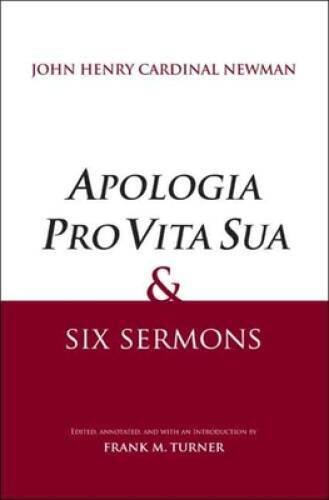
Apologia Pro Vita Sua and Six Sermons
-
Publisher
-
Yale University Press
-
Item Length
-
1 in
-
Publication Year
-
2008
-
Format
-
Hardcover
-
Language
-
English
-
Item Height
-
0.1 in
-
Genre
-
Religion, Biography & Autobiography
-
Topic
-
Christianity / Catholic, Christian Theology / Apologetics, Religious, History, Christianity / Anglican
-
Item Weight
-
31 Oz
-
Item Width
-
0.7 in
-
Number of Pages
-
528 Pages
Apologia Pro Vita Sua and Six Sermons – Hardcover – VERY GOOD
About this product
Product Identifiers
Publisher
Yale University Press
ISBN-10
0300115075
ISBN-13
9780300115079
eBay Product ID (ePID)
52612880
Product Key Features
Book Title
Apologia Pro Vita Sua and Six Sermons
Number of Pages
528 Pages
Language
English
Publication Year
2008
Topic
Christianity / Catholic, Christian Theology / Apologetics, Religious, History, Christianity / Anglican
Genre
Religion, Biography & Autobiography
Format
Hardcover
Dimensions
Item Height
0.1 in
Item Weight
31 Oz
Item Length
1 in
Item Width
0.7 in
Additional Product Features
Intended Audience
Trade
LCCN
2007-938703
Reviews
“In his own life and for the Church, John Henry Newman navigated the narrows between change and tradition, freedom and dogma, conscience and authority. Such tensions split the world still. Newman’s masterpiece, as elegantly presented by Frank M. Turner, has never been more relevant.”–James Carroll, author of House of War, “In his own life and for the Church, John Henry Newman navigated the narrows between change and tradition, freedom and dogma, conscience and authority. Such tensions split the world still. Newman”s masterpiece, as elegantly presented by Frank M. Turner, has never been more relevant.”-James Carroll, author ofHouse of War , “An exceptionally fertile and thought-provoking interpretation of both John Henry Newman and his great work.”–Colin Barr,The Journal of Ecclesiastical History, “In his own life and for the Church, John Henry Newman navigated the narrows between change and tradition, freedom and dogma, conscience and authority. Such tensions split the world still. Newman”s masterpiece, as elegantly presented by Frank M. Turner, has never been more relevant.”–James Carroll, author of “House of War”, “Frank Turner provides a genuinely new and exciting reading of Newman’s much-readApol�gia, juxtaposing the historical conditions of nineteenth-century England with Newman’s version of them.”-George Levine, Rutgers University, “An exceptionally fertile and thought-provoking interpretation of both John Henry Newman and his great work.”–Colin Barr, The Journal of Ecclesiastical History, “Frank Turner provides a genuinely new and exciting reading of Newman’s much-read Apologia , juxtaposing the historical conditions of nineteenth-century England with Newman’s version of them.”-George Levine, Rutgers University, “Frank Turner provides a genuinely new and exciting reading of Newman”s much-read Apologia , juxtaposing the historical conditions of nineteenth-century England with Newman”s version of them.”-George Levine, Rutgers University, “Professor Turner has written a very full and significant Introduction for this new edition of the Apologia. It will be a great addition to the scholarly literature on Newman.”-Robert Bruce Mullin, SPRL Professor of History, The General Theological Seminary, “Frank Turner provides a genuinely new and exciting reading of Newman”s much-readApologia, juxtaposing the historical conditions of nineteenth-century England with Newman”s version of them.”George Levine, Rutgers University, 0;Professor Turner has written a very full and significant Introduction for this new edition of the “Apologia. “It will be a great addition to the scholarly literature on Newman.1;2;Robert Bruce Mullin, SPRL Professor of History, The General Theological Seminary — Robert Bruce Mullin, “Professor Turner has written a very full and significant Introduction for this new edition of the “Apologia. “It will be a great addition to the scholarly literature on Newman.”–Robert Bruce Mullin, SPRL Professor of History, The General Theological Seminary, “Frank Turner provides a genuinely new and exciting reading of Newman’s much-read Apologia , juxtaposing the historical conditions of nineteenth-century England with Newman’s version of them.”–George Levine, Rutgers University, “Professor Turner has written a very full and significant Introduction for this new edition of the Apologia. It will be a great addition to the scholarly literature on Newman.”–Robert Bruce Mullin, SPRL Professor of History, The General Theological Seminary, “Frank Turner provides a genuinely new and exciting reading of Newman’s much-read Apol�gia, juxtaposing the historical conditions of nineteenth-century England with Newman’s version of them.”�George Levine, Rutgers University, “In his own life and for the Church, John Henry Newman navigated the narrows between change and tradition, freedom and dogma, conscience and authority. Such tensions split the world still. Newman’s masterpiece, as elegantly presented by Frank M. Turner, has never been more relevant.”-James Carroll, author of House of War, “In his own life and for the Church, John Henry Newman navigated the narrows between change and tradition, freedom and dogma, conscience and authority. Such tensions split the world still. Newman”s masterpiece, as elegantly presented by Frank M. Turner, has never been more relevant.”-James Carroll, author of House of War, “Frank Turner provides a genuinely new and exciting reading of Newman”s much-read Apológia , juxtaposing the historical conditions of nineteenth-century England with Newman”s version of them.”-George Levine, Rutgers University, “Frank Turner provides a genuinely new and exciting reading of Newman”s much-readApológia, juxtaposing the historical conditions of nineteenth-century England with Newman”s version of them.”-George Levine, Rutgers University, “An exceptionally fertile and thought-provoking interpretation of both John Henry Newman and his great work.”-Colin Barr, The Journal of Ecclesiastical History, �Professor Turner has written a very full and significant Introduction for this new edition of the Apologia. It will be a great addition to the scholarly literature on Newman.��Robert Bruce Mullin, SPRL Professor of History, The General Theological Seminary, “In his own life and for the Church, John Henry Newman navigated the narrows between change and tradition, freedom and dogma, conscience and authority. Such tensions split the world still. Newman’s masterpiece, as elegantly presented by Frank M. Turner, has never been more relevant.”�James Carroll, author of House of War, “Professor Turner has written a very full and significant Introduction for this new edition of theApologia.It will be a great addition to the scholarly literature on Newman.”-Robert Bruce Mullin, SPRL Professor of History, The General Theological Seminary, “Frank Turner provides a genuinely new and exciting reading of Newman”s much-read “Apologia,” juxtaposing the historical conditions of nineteenth-century England with Newman”s version of them.”–George Levine, Rutgers University
Dewey Edition
22
Dewey Decimal
282.092 B
Synopsis
This newly edited version of John Henry Newman’s “Apologia Pro Vita Sua” sheds new light on Newman’s celebrated account of his passage from the Church of England to the Roman Catholic Church and repositions his narrative within the context of transformative religious journeys of other Victorian intellectuals. Frank M. Turner is the first historian of Victorian thought, religion, and culture to edit Newman’s classic autobiographical narrative. Drawing on extensive research in contemporary printed materials and archives, Turner’s powerfully revisionist Introduction reevaluates and challenges the historical adequacy of previous interpretations of Newman’s life and of the “Apologia” itself. He further presents Newman’s volume as a response to ultramontane assertions of papal authority in the l860s. In addition to numerous explanatory textual annotations, the volume includes an Appendix featuring six important Anglican sermons that providesignificant insights into Newman’s thought during the years recounted in the “Apologia,”, This newly edited version of John Henry Newman’s Apologia Pro Vita Sua sheds new light on Newman’s celebrated account of his passage from the Church of England to the Roman Catholic Church and repositions his narrative within the context of transformative religious journeys of other Victorian intellectuals. Frank M. Turner is the first historian of Victorian thought, religion, and culture to edit Newman’s classic autobiographical narrative. Drawing on extensive research in contemporary printed materials and archives, Turner’s powerfully revisionist Introduction reevaluates and challenges the historical adequacy of previous interpretations of Newman’s life and of the Apologia itself. He further presents Newman’s volume as a response to ultramontane assertions of papal authority in the l860s. In addition to numerous explanatory textual annotations, the volume includes an Appendix featuring six important Anglican sermons that providesignificant insights into Newman’s thought during the years recounted in the Apologia ., This newly edited version of John Henry Newman’s Apologia Pro Vita Sua sheds new light on Newman’s celebrated account of his passage from the Church of England to the Roman Catholic Church and repositions his narrative within the context of transformative religious journeys of other Victorian intellectuals. Frank M. Turner is the first historian of Victorian thought, religion, and culture to edit Newman’s classic autobiographical narrative. Drawing on extensive research in contemporary printed materials and archives, Turner’s powerfully revisionist Introduction reevaluates and challenges the historical adequacy of previous interpretations of Newman’s life and of the Apologia itself. He further presents Newman’s volume as a response to ultramontane assertions of papal authority in the l860s. In addition to numerous explanatory textual annotations, the volume includes an Appendix featuring six important Anglican sermons that providesignificant insights into Newman’s thought during the years recounted in the Apologia.
LC Classification Number
BX4705.N5
Price : 18.34
Ends on : N/A
View on eBay