

Item specifics
- Condition
- GoodA book that has been read but is in good condition. Very minimal damage to the cover including scuff marks, but no holes or tears. The dust jacket for hard covers may not be included. Binding has minimal wear. The majority of pages are undamaged with minimal creasing or tearing, minimal pencil underlining of text, no highlighting of text, no writing in margins. No missing pages. See the seller’s listing for full details and description of any imperfections. See all condition definitionsopens in a new window or tab
- Seller Notes
- Binding
- Paperback
- Book Title
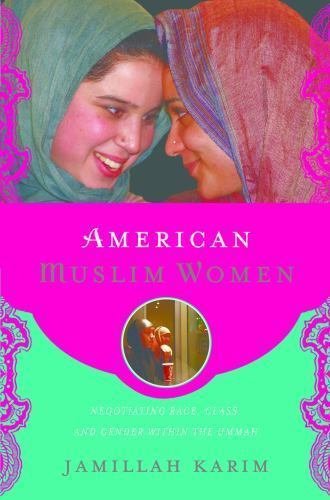
- American Muslim Women
- Weight
- 0 lbs
- Product Group
- Book
- IsTextBook
- Yes
- ISBN
- 9780814748107
- Subject Area
- Religion, Social Science
- Publication Name
- American Muslim Women : Negotiating Race, Class, and Gender Within the Ummah
- Publisher
- New York University Press
- Item Length
- 9 in
- Subject
- Islamic Studies, Social Classes & Economic Disparity, Emigration & Immigration, Gender Studies, Islam / General, Women’s Studies, Ethnic Studies / African American Studies
- Publication Year
- 2008
- Series
- Religion, Race, and Ethnicity Ser.
- Type
- Textbook
- Format
- Trade Paperback
- Language
- English
- Item Height
- 0.8 in
- Author
- Jamillah Karim
- Item Weight
- 13.8 Oz
- Item Width
- 6.7 in
- Number of Pages
- 304 Pages
- Country of Origin
- United States
American Muslim Women: Negotiating Race, Class, and Gender Within the Ummah
About this product
Product Identifiers
Publisher
New York University Press
ISBN-10
0814748104
ISBN-13
9780814748107
eBay Product ID (ePID)
154413598
Product Key Features
Number of Pages
304 Pages
Language
English
Publication Name
American Muslim Women : Negotiating Race, Class, and Gender Within the Ummah
Subject
Islamic Studies, Social Classes & Economic Disparity, Emigration & Immigration, Gender Studies, Islam / General, Women’s Studies, Ethnic Studies / African American Studies
Publication Year
2008
Type
Textbook
Subject Area
Religion, Social Science
Series
Religion, Race, and Ethnicity Ser.
Format
Trade Paperback
Dimensions
Item Height
0.8 in
Item Weight
13.8 Oz
Item Length
9 in
Item Width
6.7 in
Additional Product Features
Intended Audience
Scholarly & Professional
LCCN
2008-027948
Dewey Edition
22
Reviews
Karim’s sensitive ethnographic work and well-written analysis provide engaging insights into the lives of contemporary American Muslim women. . . . [and] flow beautifully to its thoughtful conclusion., “Karim’s sensitive ethnographic work and well-written analysis provide engaging insights into the lives of contemporary American Muslim women. . . . [and] flow beautifully to its thoughtful conclusion.” – Karen Isaksen Leonard, author of Muslims in the United States: The State of Research, American Muslim Women: Negotiating Race, Class, and Gender within the Ummah by Spelman College Professor of Religious Studies Jamillah Karim is a welcome departure from the usual portrayals of Muslim women in the U.S. as victims of their religion., ( “Drawing on her own life and the lives of the many women she interviewed, Karim reveals the subtle and uneasy ways in which racial, ethnic, class, and gender divisions in the US interact to challenge the idealized notion of a united Muslim community.” )-( CHOICE ),(), “Karim’s sensitive ethnographic work and well-written analysis provide engaging insights into the lives of contemporary American Muslim women. . . . [and] flow beautifully to its thoughtful conclusion.” – Karen Isaksen Leonard, author ofMuslims in the United States: The State of Research, “Drawing on her own life and the lives of the many women she interviewed, Karim reveals the subtle and uneasy ways in which racial, ethnic, class, and gender divisions in the US interact to challenge the idealized notion of a united Muslim community.” – CHOICE ,, “American Muslim Women: Negotiating Race, Class, and Gender within the Ummah by Spelman College Professor of Religious Studies Jamillah Karim is a welcome departure from the usual portrayals of Muslim women in the U.S. as victims of their religion.” – Color Lines ,, Jamillah Karim’s new book, American Muslim Women , is an insightful, well-written examination of the space where religion and race intersect in America. Implementing adept ethnographic skills to conduct interviews in two cities across the tangible ethnic boundaries between Sout hAsian and African American Muslims, Karim provides insight into the complexities and tensions within the Muslim ummah , or community., “. . . American Muslim Women: Negotiating Race, Class, and Gender within the Ummah by Spelman College Professor of Religious Studies Jamillah Karim is a welcome departure from the usual portrayals of Muslim women in the U.S. as victims of their religion.” – Color Lines, ”Karim’s sensitive ethnographic work and well-written analysis provide engaging insights into the lives of contemporary American Muslim women. . . . [and] flow beautifully to its thoughtful conclusion.” —Karen Isaksen Leonard, author ofMuslims in the United States: The State of Research, Drawing on her own life and the lives of the many women she interviewed, Karim reveals the subtle and uneasy ways in which racial, ethnic, class, and gender divisions in the US interact to challenge the idealized notion of a united Muslim community., “American Muslim Women: Negotiating Race, Class, and Gender within the Ummah by Spelman College Professor of Religious Studies Jamillah Karim is a welcome departure from the usual portrayals of Muslim women in the U.S. as victims of their religion.” – Color Lines, “. . . American Muslim Women: Negotiating Race, Class, and Gender within the Ummah by Spelman College Professor of Religious Studies Jamillah Karim is a welcome departure from the usual portrayals of Muslim women in the U.S. as victims of their religion.” – Color Lines ,, “Jamillah Karim’s new book, American Muslim Women, is an insightful, well-written examination of the space where religion and race intersect in America. Implementing adept ethnographic skills to conduct interviews in two cities across the tangible ethnic boundaries between Sout hAsian and African American Muslims, Karim provides insight into the complexities and tensions within the Muslim ummah, or community.” – Journal Of Middle East Women’s Studies, “Jamillah Karim’s new book, American Muslim Women, is an insightful, well-written examination of the space where religion and race intersect in America. Implementing adept ethnographic skills to conduct interviews in two cities across the tangible ethnic boundaries between Sout hAsian and African American Muslims, Karim provides insight into the complexities and tensions within the Muslim ummah, or community.” – Journal Of Middle East Women’s Studies ,, “Jamillah Karim’s new book, American Muslim Women , is an insightful, well-written examination of the space where religion and race intersect in America. Implementing adept ethnographic skills to conduct interviews in two cities across the tangible ethnic boundaries between Sout hAsian and African American Muslims, Karim provides insight into the complexities and tensions within the Muslim ummah , or community.” – Journal Of Middle East Women’s Studies ,, “. . .American Muslim Women: Negotiating Race, Class, and Gender within the Ummahby Spelman College Professor of Religious Studies Jamillah Karim is a welcome departure from the usual portrayals of Muslim women in the U.S. as victims of their religion.” -Color Lines, . . . American Muslim Women: Negotiating Race, Class, and Gender within the Ummah by Spelman College Professor of Religious Studies Jamillah Karim is a welcome departure from the usual portrayals of Muslim women in the U.S. as victims of their religion., Jamillah Karims new book, American Muslim Women, is an insightful, well-written examination of the space where religion and race intersect in America. Implementing adept ethnographic skills to conduct interviews in two cities across the tangible ethnic boundaries between Sout hAsian and African American Muslims, Karim provides insight into the complexities and tensions within the Muslim ummah, or community., “Drawing occasionally on her own experiences and deftly but lightly invoking the relevant interdisciplinary theoretical literature, Karim has produced a book that flows beautifully to its thoughtful conclusion.” Karen Isaksen Leonard, author ofMuslims in the United States: The State of Research, “Karim’s sensitive ethnographic work and well-written analysis provide engaging insights into the lives of contemporary American Muslim women. . . . [and] flow beautifully to its thoughtful conclusion.” -Karen Isaksen Leonard,author of Muslims in the United States: The State of Research, ( “Jamillah Karim’s new book, American Muslim Women , is an insightful, well-written examination of the space where religion and race intersect in America. Implementing adept ethnographic skills to conduct interviews in two cities across the tangible ethnic boundaries between Sout hAsian and African American Muslims, Karim provides insight into the complexities and tensions within the Muslim ummah , or community.” )-( Journal Of Middle East Women’s Studies ),()
Series Volume Number
10
Dewey Decimal
305.6/97
Table Of Content
Acknowledgments Introduction 1 African American and Immigrant Relations: Between Inequality and Global Flows 2 Race, Class, and Residence in the Chicago Ummah: Ethnic Muslim Spaces and American Muslim Discourses 3 Across Ethnic Boundaries: Women’s Movement and Resistance in the Chicago Ummah 4 Negotiating an American Muslim Identity after September 11: Second-Generation Muslim Women in Chicago 5 Negotiating Gender Lines: Women’s Movement across Atlanta Mosques 6 Negotiating Sisterhood, Gender, and Generation: Friendship between Second-Generation South Asian American and African American Muslim Women Conclusion Notes Bibliography Glossary Index About the Author
Synopsis
African American Muslims and South Asian Muslim immigrants are two of the largest ethnic Muslim groups in the U.S. Yet there are few sites in which African Americans and South Asian immigrants come together, and South Asians are often held up as a “model minority” against African Americans. However, the American ummah, or American Muslim community, stands as a unique site for interethnic solidarity in a time of increased tensions between native-born Americans and immigrants. This ethnographic study of African American and South Asian immigrant Muslims in Chicago and Atlanta explores how Islamic ideals of racial harmony and equality create hopeful possibilities in an American society that remains challenged by race and class inequalities. The volume focuses on women who, due to gender inequalities, are sometimes more likely to move outside of their ethnic Muslim spaces and interact with other Muslim ethnic groups in search of gender justice. American Muslim Women explores the relationships and sometimes alliances between African Americans and South Asian immigrants, drawing on interviews with a diverse group of women from these two communities. Karim investigates what it means to negotiate religious sisterhood against America’s race and class hierarchies, and how those in the American Muslim community both construct and cross ethnic boundaries. American Muslim Women reveals the ways in which multiple forms of identity frame the American Muslim experience, in some moments reinforcing ethnic boundaries, and at other times, resisting them., Explores how Islamic ideals of racial harmony and equality create hopeful possibilities in an American society that remains challenged by race and class inequalities
LC Classification Number
E184.M88K37 2008
Price : 5.43
Ends on : N/A
View on eBay